
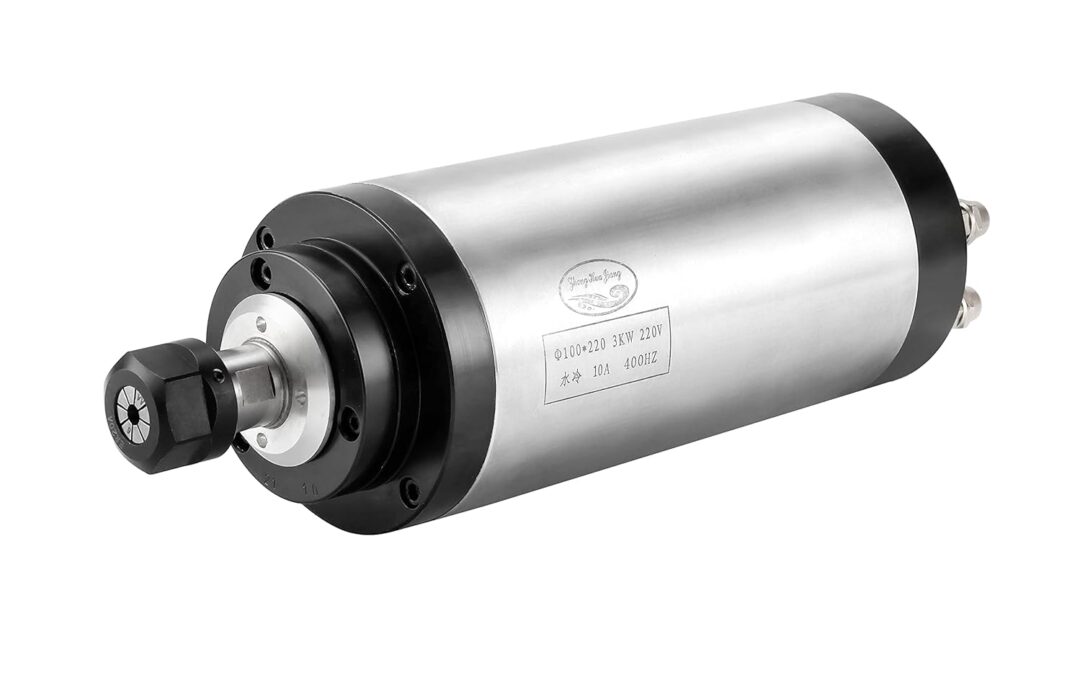
In the evolving world of precision manufacturing, noise reduction has become an increasingly important focus for modern CNC machining facilities. As production speeds increase and machining centers operate for longer hours, excessive sound levels can negatively affect worker comfort, accuracy, machine longevity, and overall factory efficiency. This growing challenge has led to a breakthrough innovation known as Quiet-Cut spindle technology—a next-generation spindle design engineered specifically to deliver ultra-low noise performance during high-speed machining. Unlike traditional spindles that generate substantial vibration, acoustic resonance, and mechanical turbulence, Quiet-Cut spindle systems incorporate advanced damping materials, precision-engineered bearings, intelligent motor control algorithms, and optimized airflow channels to dramatically reduce operational noise. This new wave of spindle engineering is not only redefining acoustic comfort but also reshaping how smart factories approach machining performance, tool stability, and long-term operational sustainability. As industries such as aerospace, automotive, mold manufacturing, electronics, defense, and medical engineering demand quieter and more efficient machining environments, Quiet-Cut spindle technology has quickly emerged as a critical advancement for modern CNC workshops.
One of the core strengths of Quiet-Cut spindle technology lies in its ability to control vibration at its source. Noise in CNC machining is often a symptom of deeper mechanical issues such as spindle imbalance, bearing friction, tool chatter, air turbulence, or structural resonance. Quiet-Cut spindle systems address these challenges through high-stability spindle shafts, dynamically balanced rotor assemblies, and vibration-damping housings that absorb micro-vibrations before they develop into audible noise. The use of advanced ceramic hybrid bearings further reduces friction, heat generation, and noise levels while allowing the spindle to operate at higher speeds without compromising durability. Additionally, the motor design incorporates software-controlled torque adjustments that eliminate sudden load spikes and reduce the harmonic frequencies that often cause chatter during cutting. This optimized spindle performance not only minimizes acoustic output but also results in cleaner cutting lines, better surface finishes, tighter tolerances, and more stable tool engagement. By minimizing the vibration that traditionally disrupts machining precision, Quiet-Cut technology helps CNC workshops achieve higher-quality results with less tool wear and fewer interruptions.
Quiet-Cut spindle systems also introduce innovative airflow and cooling improvements that significantly reduce noise during high-speed cutting operations. Traditional spindles rely heavily on forced-air cooling and high-volume airflow, which can create loud, turbulent noise due to uncontrolled air channels and rapid pressure changes inside the spindle housing. Quiet-Cut designs solve this through aerodynamic engineering that directs airflow smoothly through internal cooling chambers, minimizing turbulence and enhancing thermal stability. Some Quiet-Cut models also incorporate liquid-cooled spindle housings, which eliminate the need for excessive airflow altogether. This not only reduces acoustic emissions but improves temperature consistency, allowing the spindle to maintain optimal thermal equilibrium even under demanding load conditions. A cooler spindle experiences less thermal expansion, meaning machining accuracy remains stable over long production cycles. By maintaining this thermal balance, Quiet-Cut technology reduces the chances of dimensional deviations, tool breakage, and material warping—problems often exacerbated by unstable spindle temperatures. The result is a quieter, cooler, more efficient machining environment that supports continuous operation without compromising performance.
Another vital advantage of Quiet-Cut spindle technology is its impact on worker safety and productivity. Prolonged exposure to high decibel levels can lead to hearing fatigue, reduced concentration, slower response times, and long-term health issues for machine operators. In manufacturing environments where machinery noise can exceed safe levels, workers are often required to use hearing protection, communicate via signals instead of voice, or rotate tasks frequently to limit exposure. Quiet-Cut spindle technology transforms this dynamic by lowering operational sound levels to a range that is significantly more comfortable and sustainable for long shifts. This enhances communication among operators, improves focus during precision machining tasks, and reduces the risk of errors that occur when workers are distracted by excessive noise. Additionally, quieter machines create a more comfortable workplace, helping companies attract and retain skilled operators while meeting modern occupational safety standards. The reduction in noise also benefits industries that require clean, quiet environments—such as aerospace component assembly, medical device manufacturing, and electronics production—where acoustic sensitivity can have broader implications on quality and workflow efficiency.
Beyond immediate operational benefits, Quiet-Cut spindle technology plays a strategic role in the long-term productivity and efficiency of CNC machining facilities. A quieter spindle typically experiences less internal stress, smoother rotation, and more stable cutting conditions—factors that contribute to longer bearing life, reduced maintenance frequency, and lower long-term ownership costs. Cleaner cutting performance means fewer tool breakages, extended tool life, and more consistent part quality across large production batches. Over time, these improvements translate into reduced tool inventory costs, fewer machine stoppages, and a significant boost in production efficiency. In addition, Quiet-Cut spindles support the increasing automation of CNC workshops by enhancing sensor accuracy, improving machine-learning analysis of vibration data, and ensuring stable conditions for automated production cycles. With the rise of smart manufacturing, where machines operate autonomously with minimal human oversight, stable spindle acoustics help ensure that predictive maintenance systems can accurately interpret mechanical feedback. Quiet-Cut spindle performance is therefore not just an acoustic enhancement—it is a foundation for intelligent, data-driven machining environments.
Ultimately, Quiet-Cut spindle technology represents a powerful shift in how CNC workshops balance performance, precision, efficiency, and operator well-being. As industrial machining evolves toward higher speeds, smaller tolerances, and automated operations, the importance of stable and quiet spindle performance continues to grow. Noise reduction is no longer treated as a secondary consideration; it is integrated directly into the engineering design of next-generation CNC systems. By adopting Quiet-Cut spindle solutions, manufacturers benefit from quieter shop floors, improved machining accuracy, reduced tool costs, longer spindle life, and enhanced operator comfort. In industries where precision defines competitive advantage and operational efficiency determines profitability, Quiet-Cut technology delivers a vital step towards smarter, cleaner, and more sustainable CNC operations. As global manufacturing embraces digital transformation and automation, the facilities that invest in noise-reduced spindle innovations today will define the future standard of quiet, high-performance machining environments.