
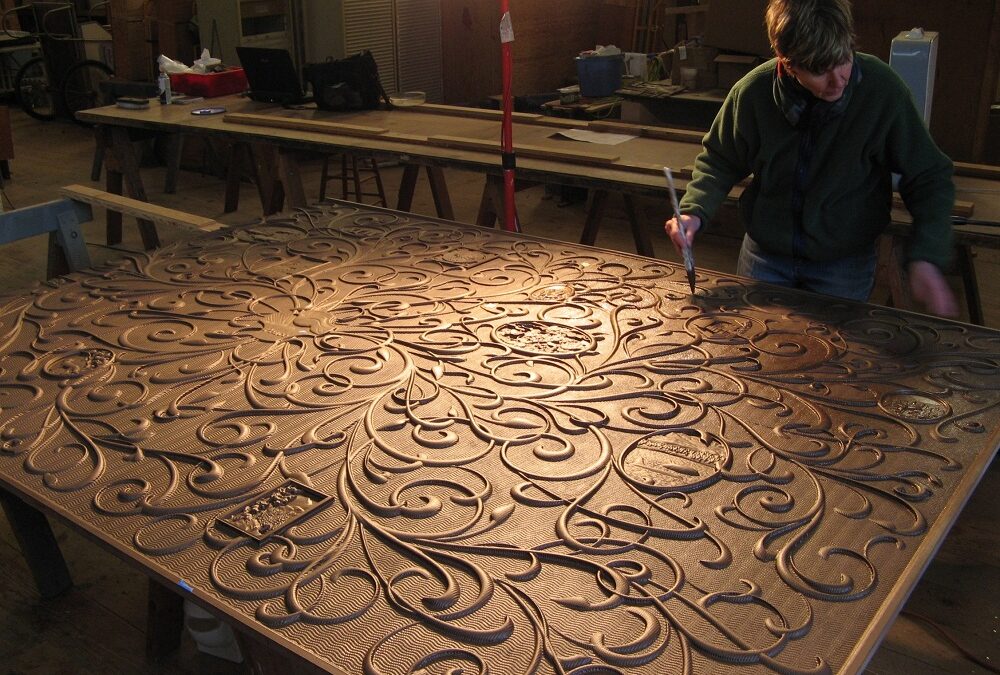
In industrial woodworking, the demand for intricate patterns, flawless surface finishes, and consistent replication has grown dramatically across sectors such as furniture manufacturing, architectural millwork, decorative paneling, luxury interiors, and custom fabrication. Fine-detail CNC carving has become the foundation of this evolution, offering precision that hand-carving techniques cannot match in speed, accuracy, or scalability. As manufacturers move toward mass customization and high-complexity product lines, CNC carving technology provides the capability to reproduce highly detailed motifs—such as ornate scrollwork, relief sculptures, lattice patterns, and engraved textures—at industrial production speeds. Modern CNC routers equipped with high-speed spindles, intelligent toolpath automation, and advanced carving algorithms allow woodworking companies to achieve fine detailing that once required hours of artisanal labor. With continuous improvements in machine rigidity, cutting tools, software control, and digital modeling, fine-detail CNC carving is becoming a central driver of innovation for any manufacturer seeking higher aesthetic quality and tighter tolerances in wood components.
One of the most effective methods for fine-detail CNC carving lies in optimizing toolpath strategies to align with the natural properties of wood. Because wood is anisotropic—meaning its grain pattern affects cutting behavior—toolpath planning must compensate for potential tear-out, fiber lifting, and density variation. Techniques such as raster finishing, spiral interpolation, offset contouring, and micro-stepping toolpaths are commonly used to maintain clean edges and consistent surface textures across complex geometries. High-resolution toolpaths with smaller stepovers allow the cutter to move smoothly over curved or highly detailed surfaces, reducing visible tool marks and minimizing sanding requirements. For extremely detailed relief carvings or fine engraving work, simultaneous multi-axis toolpaths help maintain optimal cutter orientation, reducing side-load forces that could cause chipping along grain boundaries. The combination of these advanced pathing techniques enables manufacturers to produce carvings with smooth transitions, crisp edges, and intricate detailing, even in hardwoods known for their challenging grain structures.
Cutting tool selection plays an equally significant role in achieving fine-detail results. Industrial CNC carving relies heavily on micro-grain carbide tools, ball-nose end mills, tapered carving bits, and engraving cutters that are engineered for high precision and minimal deflection. Tapered ball-nose bits, for example, provide exceptional strength and stability for 3D relief carving, allowing deeper cuts without compromising detail accuracy. For ultra-fine detailing—such as lettering, filigree, or shallow engravings—V-bits and micro-end mills are commonly used because of their ability to create sharp, narrow lines. Tool coatings such as TiAlN or diamond-like coatings further enhance tool life, especially when working with abrasive engineered woods like MDF or HDF. Additionally, using shorter tool lengths whenever possible minimizes tool flex, which is essential for maintaining dimensional accuracy when carving extremely fine details. By selecting the proper cutting geometry and pairing it with optimized spindle speeds and feed rates, manufacturers can reduce chatter, improve edge clarity, and achieve superior surface finishes across a wide range of wood species.
Another major advancement in fine-detail CNC carving is the integration of intelligent carving software and digital modeling tools. CAM platforms today offer specialized 3D carving modules that automatically generate high-resolution toolpaths based on surface geometry, material type, and cutter specifications. Machine learning–driven carving algorithms can analyze model complexity and adjust toolpath density in areas with tighter curvature, ensuring consistent detail across varying scales. Digital sculpting software allows designers to create ultra-complex models—such as organic shapes, textured surfaces, and artistic reliefs—that can be translated directly into CNC-ready toolpaths without manual editing. Advanced simulation tools provide real-time previews of cutting operations, helping operators avoid gouges, collisions, or surface imperfections before machining begins. These digital innovations reduce trial-and-error cycles, shorten production timelines, and empower manufacturers to explore more creative and intricate design possibilities without compromising manufacturability.
Equally important to achieving fine-detail results is the stability and precision of the CNC machine itself. Industrial woodworking machines equipped with rigid steel frames, high-accuracy linear guides, and low-backlash ball screws ensure smooth, vibration-free motion during high-speed carving operations. High-frequency spindles with excellent runout control allow micro-tools to cut cleanly without introducing micro-chatter, which can blur fine edges. Dust extraction and chip evacuation systems also play a vital role in maintaining detail clarity, preventing debris from interfering with the cutting surface. Some advanced CNC routers include automatic tool-length measurement, in-process probing, and real-time feedback systems that adjust cutting parameters dynamically based on machine load or material feedback. This level of precision ensures that even the most delicate features remain sharp and consistent, particularly when producing large batches of identical carved components. As industrial woodworking machinery becomes increasingly sophisticated, manufacturers gain the ability to produce intricate carvings at production volumes that would have been impossible with earlier technology.
Ultimately, fine-detail CNC carving techniques are reshaping the capabilities of industrial woodworking by combining artistry with manufacturing efficiency. With the right balance of high-resolution toolpaths, specialized cutting tools, intelligent software, and precision machinery, manufacturers can push the boundaries of woodworking design while ensuring repeatable, high-quality results. These innovations enable businesses to meet rising expectations for visual detail, customization, and flawless craftsmanship across a wide range of products. Whether producing ornate furniture components, architectural embellishments, luxury interior finishes, or custom branding elements, modern CNC carving provides the accuracy, speed, and design freedom required to stay competitive in today’s fast-evolving market. As technology continues to advance, fine-detail CNC carving will remain at the forefront of industrial woodworking, enabling manufacturers to transform complex digital models into tangible, intricately carved works with unmatched precision and efficiency.