
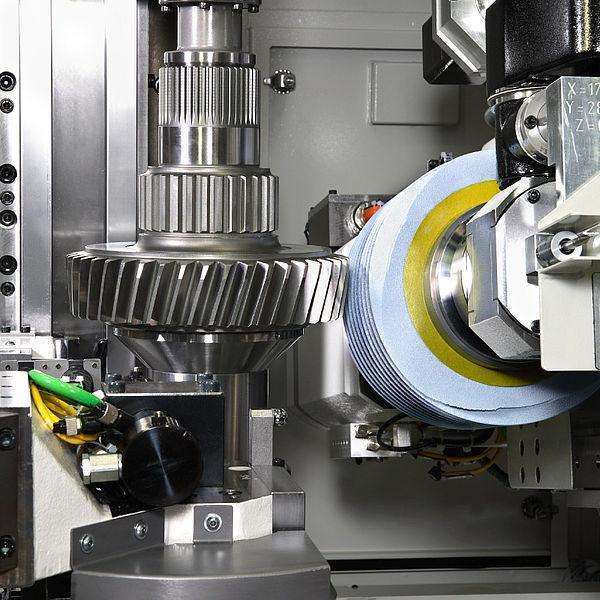
In modern manufacturing, the demand for gears with exceptional accuracy, durability, and smooth transmission performance has never been higher. Industries such as aerospace, automotive, robotics, and renewable energy all rely on high-precision gears capable of withstanding intense loads while maintaining flawless motion. This increasing demand has pushed manufacturers to embrace CNC grinding innovations that elevate gear quality far beyond what traditional machining methods can achieve. CNC grinding offers micron-level precision, superior surface finishes, and unparalleled repeatability, making it an indispensable technology for producing gears that meet strict international standards. As new machines, control systems, and grinding technologies continue to evolve, gear manufacturers gain the ability to reach tighter tolerances, produce more complex geometries, and streamline production with unprecedented efficiency. The shift toward advanced CNC grinding is reshaping what is possible in precision gear manufacturing, setting a new benchmark for consistency and quality.
One of the major breakthroughs in CNC grinding for gears is the integration of advanced multi-axis control combined with real-time compensation algorithms. Multi-axis interpolation allows grinding wheels to follow complex tooth profiles with smooth and continuous motion, reducing deviations that previously required manual correction. High-precision direct-drive motors and absolute encoders further enhance positioning accuracy, enabling the machine to maintain a stable trajectory even at high grinding speeds. Real-time compensation systems adjust the grinding path dynamically to counteract environmental changes, thermal expansion, or wheel wear. This eliminates the need for frequent manual recalibration, drastically improving consistency across long production runs. For industries that depend on gears with extreme tolerance requirements—such as helicopter transmissions, wind turbine gearboxes, and ultra-high-speed robotics—this level of automated precision ensures reliability while reducing costly scrap rates.
Equally significant is the evolution of grinding wheel technology, which directly impacts the finish quality and dimensional accuracy of gear teeth. Modern CNC grinders now utilize abrasive solutions such as vitrified CBN (Cubic Boron Nitride), electroplated CBN, and advanced ceramic compositions. These materials offer superior hardness, thermal stability, and wear resistance, allowing manufacturers to maintain accurate tooth profiles over long grinding cycles. Vitrified CBN wheels, for example, combine high cutting efficiency with excellent form retention, making them ideal for producing hardened steel gears with consistent results. Additionally, improved coolant delivery systems—such as high-pressure, precisely targeted coolant jets—prevent thermal damage and micro-cracking while ensuring clean chip evacuation. The combination of optimized abrasives and advanced cooling enhances tool life, improves surface integrity, and reduces cycle time, allowing manufacturers to achieve both speed and precision simultaneously.
Automation is another driving factor behind the rapid advancements in CNC grinding for precision gears. Robotic loading systems, automatic wheel dressing units, and in-process measuring probes have transformed the grinding process from a skill-dependent operation into a highly automated production workflow. Modern CNC grinders can perform automatic wheel dressing with micron-level accuracy, ensuring optimal wheel shape and cutting efficiency throughout the grinding cycle. In-process measurement systems use laser scanners, tactile probes, or optical sensors to verify tooth geometry during grinding rather than after completion. This eliminates manual inspection delays and enables immediate corrective action when deviations occur. Automated part handling ensures continuous operation, minimizes human error, and facilitates lights-out manufacturing. Through these innovations, gear manufacturers achieve higher throughput while maintaining the consistency and precision required for demanding applications.
Software advancements also play a central role in elevating gear grinding performance. Today’s CNC gear grinders are equipped with intelligent software platforms capable of simulating grinding paths, predicting wheel wear, and optimizing cycle parameters based on material hardness and gear geometry. Digital twin technology allows manufacturers to create virtual models of their grinding process, enabling them to experiment with various settings without risking damage to expensive gears or wheels. CAM software enhancements improve the ability to generate complex tooth profiles such as hypoid, helical, and double-helical gears with exceptional precision. Meanwhile, embedded analytics and machine learning algorithms monitor performance data to identify patterns, predict maintenance needs, and reduce downtime. The integration of these digital tools not only improves accuracy but also shortens setup times, accelerates new product development, and empowers manufacturers with greater process control.
Ultimately, CNC grinding innovations are transforming precision gear manufacturing by enhancing accuracy, improving efficiency, and reducing operational complexity. From multi-axis control and advanced abrasives to automation and intelligent software, modern grinding technology delivers capabilities that were once unattainable through conventional machining methods. As industries demand gears that function reliably under extreme loads, high speeds, and complex motion requirements, the role of CNC grinding will continue to expand. Manufacturers that adopt these advanced technologies gain a significant competitive advantage: they can produce gears with superior consistency, reduced lead times, and lower production costs while meeting the stringent standards of global markets. CNC grinding innovations are not simply incremental improvements—they represent a strategic leap forward that defines the future of precision gear manufacturing.