
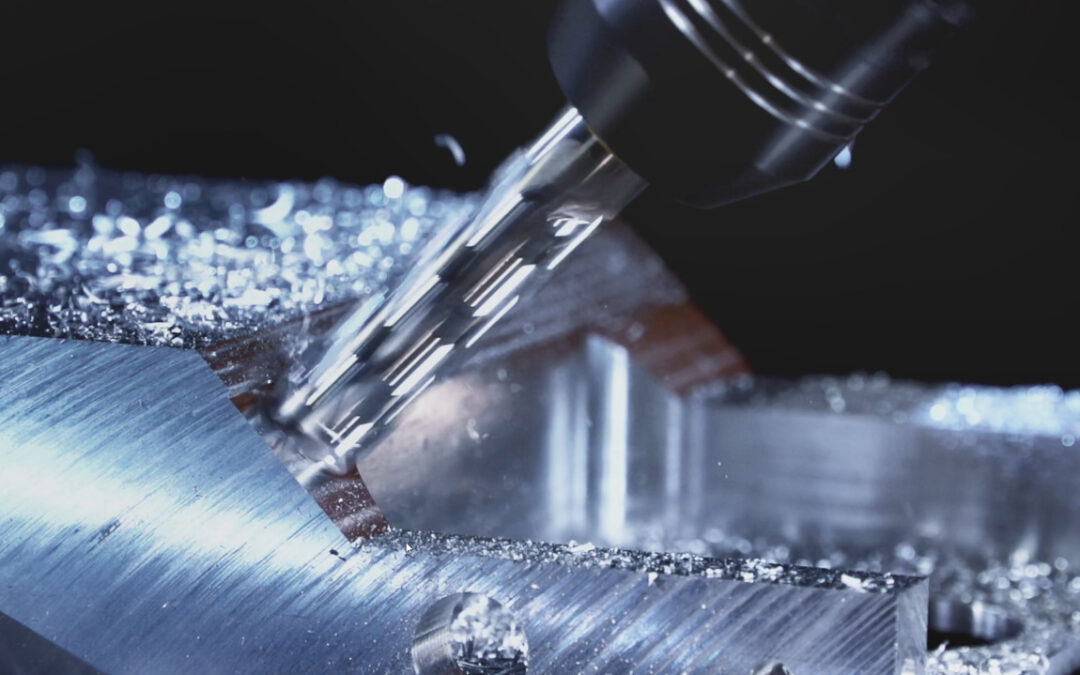
Adaptive feed rate control has become one of the most influential advancements in the evolution of intelligent CNC systems, transforming the way modern manufacturers manage precision machining. As industries push toward higher productivity, improved accuracy, and greater cost efficiency, adaptive control bridges the gap between rigid machining strategies and dynamic, real-time optimization. Traditional CNC machining operates with fixed feed rates based on material type, tool diameter, and expected cutting conditions. However, real machining environments are never static. Variations in material hardness, tool wear, thermal expansion, chip load, vibration, and part geometry can significantly affect cutting performance. Adaptive feed rate control leverages sensors, algorithms, and machine-learning models to automatically adjust feed rates based on live feedback during machining. This capability enhances cutting efficiency, protects tools, and improves part quality without requiring constant operator intervention. In the era of Industry 4.0, such intelligent automation is reshaping how manufacturers approach both high-volume production and complex custom machining.
One of the core benefits of adaptive feed rate control is its ability to maximize tool life while maintaining optimal machining speeds. In conventional machining, conservative feed rates are often selected to prevent tool breakage or surface defects, especially when working with challenging materials like titanium, Inconel, hardened steels, or composite structures. This safety margin, however, leads to longer cycle times and lower productivity. Adaptive feed rate systems continuously monitor cutting forces, spindle load, acoustic signals, vibration patterns, and thermal behavior. When the machine detects a rise in cutting resistance or a change in tool engagement, it automatically reduces the feed rate to prevent overload. Conversely, when conditions are stable, the system increases the feed rate to maintain maximum efficiency. This dynamic balance results in smoother cutting, reduced heat generation, and significantly extended tool lifespan. Over time, these improvements translate into lower tooling costs, higher operational throughput, and more predictable machining performance—key advantages for competitive manufacturing environments.
The integration of AI and machine learning has further revolutionized adaptive feed rate control, enabling CNC systems to learn from historical machining data and continuously improve their performance. Unlike earlier generations of adaptive control that relied solely on threshold values and linear responses, modern intelligent CNC systems utilize pattern recognition and predictive algorithms to anticipate machining issues before they occur. Machine learning models analyze past tool wear trends, geometric variations, spindle power consumption, and vibration signatures to predict the optimal feed rate for each toolpath segment. This predictive capability allows the system to optimize cutting conditions even when machining complex geometries with abrupt transitions, tight radii, or variable wall thicknesses. Additionally, AI-driven adaptive control supports mass customization by automatically adjusting feed strategies for unique parts without extensive manual programming. Manufacturers gain the flexibility needed to switch between different materials, designs, and job requirements while maintaining consistent quality and performance.
In high-speed machining environments, adaptive feed rate control plays a crucial role in minimizing chatter, deformation, and thermal distortion—three major challenges that affect surface quality and dimensional accuracy. Chatter, a form of self-excited vibration, can damage tools and leave visible marks on the workpiece. Intelligent feed rate control mitigates chatter by detecting early vibration signatures and adjusting feed rates to stabilize cutting forces. Thermal distortion, another common issue, occurs when excessive heat builds up during machining, causing materials to expand or warp. Adaptive control systems help manage temperature by optimizing chip evacuation and maintaining cutting parameters that reduce heat generation. These benefits are particularly valuable in aerospace, automotive, medical device manufacturing, and mold-making industries where surface integrity is critical. The combination of stable machining conditions and real-time optimization ensures that parts achieve the precise tolerances, smooth finishes, and structural reliability demanded by today’s engineering standards.
Adaptive feed rate control also enhances sustainability and resource efficiency in CNC machining operations. By reducing unnecessary tool wear, minimizing scrap, and shortening cycle times, intelligent CNC systems contribute to more environmentally conscious manufacturing practices. Energy consumption in machining is closely tied to spindle load, tool engagement, and feed rate fluctuations. Adaptive control helps stabilize these factors, leading to lower energy usage and more consistent machine performance. Furthermore, less heat generation means fewer cooling fluids are required, reducing both material costs and environmental impact. Manufacturers pursuing green manufacturing initiatives or ISO 14001 certification benefit greatly from adopting adaptive control technologies. The shift toward intelligent machining not only drives operational efficiency but also supports long-term sustainability goals across diverse industrial sectors.
As smart factories continue to evolve, adaptive feed rate control stands as a cornerstone technology in the broader transformation of CNC machining. Its integration with digital twins, IoT sensors, predictive maintenance systems, and cloud-connected monitoring platforms further enhances accuracy, efficiency, and reliability. Digital twins, for example, allow manufacturers to simulate machining conditions and identify the best feed strategies before production even begins, while IoT-connected sensors offer real-time updates on spindle health and cutting conditions. Together, these technologies create a unified ecosystem where adaptive control operates as part of a larger network designed to streamline workflow and elevate overall manufacturing performance. In the future, adaptive feed rate systems will continue to advance, becoming even more autonomous and capable of self-correcting machining behavior with minimal human input. For manufacturers seeking to remain competitive in a rapidly changing global market, mastering adaptive feed rate control is essential—not only as a means of improving machining output but as a strategic step toward fully intelligent, data-driven production.