
CNC machining approaches for high-temperature alloy materials have become a central focus of modern manufacturing as global industries increasingly rely on materials capable of maintaining strength, stability, and corrosion resistance under extreme thermal and mechanical loads. High-temperature alloys such as Inconel, Hastelloy, Monel, Waspaloy, and titanium-based superalloys are now widely used in aerospace engines, power generation systems, chemical processing equipment, automotive performance components, and advanced medical devices. These materials are specifically engineered to resist deformation, oxidation, creep, and fatigue at elevated temperatures, but these same qualities make them exceptionally difficult to machine. Compared to conventional steels and aluminum alloys, high-temperature alloys exhibit extreme cutting resistance, rapid work hardening, low thermal conductivity, and a strong tendency to generate heat at the cutting zone. Traditional machining strategies often lead to excessive tool wear, surface tearing, dimensional inaccuracy, and unstable cutting conditions when applied to these alloys. As a result, CNC machining for high-temperature materials requires a significantly more refined approach that integrates advanced tooling, optimized cutting parameters, rigid machine platforms, precision cooling strategies, and intelligent process control. Successfully machining these alloys is no longer just a matter of removing material efficiently—it is a comprehensive exercise in thermal management, vibration control, cutting force optimization, and long-term process stability.
One of the most critical foundations of successful CNC machining for high-temperature alloy materials lies in cutting tool selection and tool geometry optimization. These alloys place extraordinary mechanical and thermal stress on cutting edges, making standard high-speed steel tools largely ineffective for sustained production use. Instead, modern operations rely heavily on ultra-fine grain solid carbide tools, ceramic cutting tools, cubic boron nitride inserts, and advanced coated tooling systems. Multi-layer PVD and CVD coatings such as titanium aluminum nitride, aluminum titanium nitride, and nanocomposite thermal barrier coatings provide surface hardness, heat resistance, and reduced friction at the cutting interface. Tool geometry also plays a vital role, as sharper cutting edges with optimized rake angles reduce cutting forces and minimize work hardening at the material surface. Chip breaker designs must be precisely engineered to control chip formation, as long, continuous chips are common in materials like Inconel and can quickly entangle tools, damage the workpiece, or cause sudden tool failure. Tool holding systems further influence performance, with shrink-fit and hydraulic holders providing superior concentricity and vibration damping at high spindle loads. In high-temperature alloy machining, even minimal tool runout can lead to uneven cutting forces that drastically shorten tool life. Therefore, tool management strategies such as predictive wear monitoring, pre-set tool length control, and scheduled tool replacement are not optional—they are essential for maintaining both productivity and dimensional stability.
Machine rigidity and thermal stability form the mechanical backbone of CNC machining operations involving high-temperature alloys. These materials generate intense cutting forces that can easily overwhelm lightweight machine structures, resulting in deflection, chatter, and inconsistent surface quality. High-performance CNC machining centers for superalloy processing are engineered with reinforced cast iron or polymer concrete frames, heavy-duty linear guide systems, and high-torque spindles capable of delivering consistent power across wide speed ranges. Spindle performance is particularly critical, as machining high-temperature alloys often requires lower cutting speeds but higher torque to control cutting loads and manage heat generation. Thermal stability also becomes a dominant factor during long machining cycles, as heat accumulation within the spindle, tool, and workpiece can cause measurable dimensional drift. Advanced CNC platforms integrate thermal compensation systems that use sensors to monitor temperature variations and automatically adjust axis positioning to preserve accuracy. Closed-loop servo systems and high-resolution encoders further enhance positional precision under fluctuating loads. In demanding aerospace and energy sector applications, full environmental control of the machining enclosure is often employed to stabilize ambient temperature and humidity, ensuring repeatable accuracy across extended production runs. Without this level of mechanical and thermal discipline, consistent CNC machining of high-temperature alloys simply cannot be achieved at industrial scale.
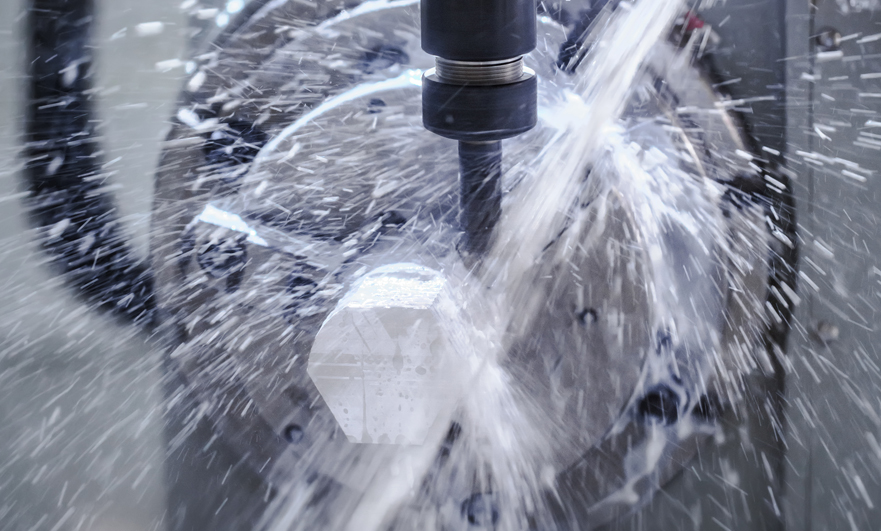
Cooling and lubrication strategies represent one of the most decisive differentiators between average and high-performance CNC machining results when working with high-temperature alloy materials. Because many of these alloys possess low thermal conductivity, a significant portion of the cutting heat remains concentrated at the cutting edge rather than being dissipated through the chip. This localized heat buildup accelerates tool wear, increases the risk of built-up edge formation, and degrades surface integrity. Conventional flood cooling, while helpful in basic machining operations, is often insufficient for the extreme thermal loads generated during high-speed or heavy-duty machining of superalloys. As a result, modern CNC machining approaches increasingly rely on high-pressure through-spindle coolant systems that deliver coolant directly to the cutting zone at pressures exceeding 70 bar. This ensures effective chip evacuation, stabilized cutting temperatures, and reduced flank wear. In even more demanding applications, cryogenic cooling using liquid nitrogen or carbon dioxide is adopted to dramatically lower cutting temperatures and extend tool life. Minimum quantity lubrication systems are also used strategically in finishing operations to reduce friction while avoiding thermal shock to the cutting edge. The proper integration of these cooling technologies not only enhances tool performance but also preserves metallurgical properties at the machined surface, preventing micro-cracking, surface oxidation, and residual stress buildup that can compromise long-term component reliability.
Toolpath strategy and CNC programming techniques further define the success of high-temperature alloy machining. Conventional slotting, aggressive plunge cuts, and full-width tool engagement generate excessive cutting forces that are unsustainable in superalloy environments. Advanced CAM software enables high-efficiency machining strategies such as trochoidal milling, adaptive clearing, and constant engagement toolpaths that maintain uniform chip thickness and distribute cutting loads evenly along the tool edge. These strategies dramatically reduce radial pressure on the cutting tool, lower vibration, and stabilize heat generation across the cutting zone. Multi-axis machining strategies also allow optimal tool orientation throughout the cut, reducing contact area and enhancing chip evacuation efficiency. Rest machining and staged depth control are essential for maintaining dimensional integrity in deep cavities and complex geometries. High-temperature alloys are particularly sensitive to sudden changes in cutting conditions, making smooth entry and exit moves, helical ramping, and controlled step-over values critical for tool longevity. CNC control systems with real-time feed rate optimization and spindle load monitoring provide an additional layer of protection by automatically adjusting cutting parameters to compensate for localized hardness variations and thermal fluctuations. This combination of intelligent programming and responsive machine control transforms high-temperature alloy machining from a high-risk operation into a predictable, repeatable production process.
Surface integrity and dimensional accuracy are among the most critical quality metrics in CNC machining for high-temperature alloy components, particularly in safety-critical industries such as aerospace, defense, power generation, and medical manufacturing. These components often operate under sustained thermal cycling, high mechanical loads, and corrosive environments where even microscopic surface defects can initiate fatigue cracks or corrosion failures. Achieving optimal surface finish requires fine control over feed rate, cutting speed, depth of cut, and tool condition throughout the machining cycle. Finishing operations typically involve reduced cutting forces, stabilized spindle speeds, and ultra-fine step-over values to minimize surface tearing and residual stress accumulation. Tool wear monitoring becomes especially critical during finishing passes, as any degradation of the cutting edge can directly translate into surface imperfections that compromise fatigue life. Precision in-process probing systems are used to verify dimensional accuracy at multiple stages of the machining cycle, while advanced metrology techniques such as coordinate measuring machines, laser scanning, and surface roughness analysis ensure compliance with strict geometric and surface integrity standards. In highly regulated industries, full digital traceability of machining parameters, tooling history, and inspection data is often required to meet international quality and certification frameworks. CNC machining for high-temperature alloys is therefore not just a production process—it is an integrated quality assurance ecosystem built around precision, consistency, and long-term performance reliability.
The future of CNC machining approaches for high-temperature alloy materials is being shaped by rapid advances in artificial intelligence, automation, digital simulation, and smart manufacturing technologies. AI-driven process optimization systems are now capable of analyzing real-time cutting force data, vibration signatures, temperature profiles, and tool wear patterns to automatically adjust machining parameters for optimal performance. Digital twins of superalloy machining processes allow manufacturers to simulate cutting behavior, thermal flow, and tool stress before production begins, dramatically reducing setup time and minimizing the risk of costly trial-and-error runs. Robotic automation and unmanned machining cells enable continuous production of high-temperature alloy components with minimal human intervention, improving productivity while ensuring consistent quality across large production volumes. As industries continue to demand lighter, stronger, and more thermally resistant components, the role of high-temperature alloys will only expand. Manufacturers that master advanced CNC machining strategies—combining intelligent tooling, thermal management, adaptive programming, and data-driven process control—will be best positioned to lead the next generation of high-performance manufacturing. In this evolving landscape, CNC machining for high-temperature alloy materials is no longer defined by brute cutting power alone, but by precision engineering, digital intelligence, and uncompromising control over every aspect of the machining environment.