
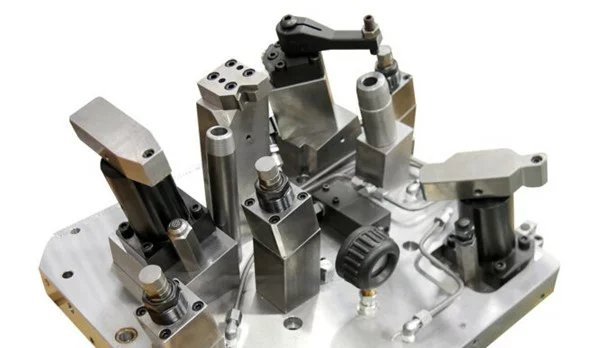
Advanced fixturing solutions have become a critical pillar of modern CNC machining, especially as industries push toward producing increasingly complex geometries, tighter tolerances, and multi-material assemblies. The evolution of manufacturing across aerospace, medical devices, automotive engineering, and precision tooling has placed enormous emphasis on fixture accuracy, modularity, and adaptability. Today, advanced fixturing is not only about holding a workpiece securely—it is about enabling smarter workflows, minimizing distortions, improving repeatability, and supporting high-speed machining operations. Search algorithms increasingly prioritize technical depth, clarity, and real-world application insights, making it essential for content related to CNC fixturing to highlight engineering benefits, operational efficiency, and the innovative systems that drive modern production. As demand grows for intricate parts with complex internal and external features, advanced fixturing solutions position manufacturers to achieve superior accuracy and reduced cycle time while maintaining consistent part quality.
A fundamental requirement of CNC fixturing for complex workpieces is stability during machining operations. High spindle speeds, dynamic tool paths, and multi-axis cuts create enormous forces that can deflect improperly secured workpieces, resulting in dimensional inaccuracies or poor surface finish. Advanced fixturing solutions utilize rigid base plates, modular clamping systems, and precision-located pins to ensure absolute workholding stability. These fixtures are engineered to minimize vibration and prevent micro-movements that compromise machining accuracy. For unusual part geometries, soft jaws, vacuum fixtures, and custom contoured nests are employed to support the workpiece without applying excessive clamping force. Additive-manufactured fixture components are also gaining popularity, enabling rapid production of complex shapes that perfectly match the workpiece contour. By combining finite element analysis with modern CAD/CAM capabilities, engineers can simulate fixture behavior under load, ensuring the fixturing strategy performs optimally before machining begins.
As CNC machining continues to evolve, multi-axis operations have become the norm for producing intricate components with deep cavities, angular features, and compound curvature surfaces. This shift has elevated the importance of modular and multi-sided fixturing systems. Traditional single-operation clamping solutions often require repositioning the workpiece multiple times, increasing setup time and introducing positional errors. Advanced multi-axis fixturing solutions, such as self-centering vices, trunnion tables, tombstone fixtures, and multi-face modular blocks, allow machinists to access multiple surfaces in one setup. This capability improves throughput and machining efficiency while preserving tight tolerances across all workpiece features. For highly complex components, zero-point clamping systems streamline the process by enabling instant fixture changes with micron-level repeatability. This not only reduces downtime but also supports high-mix, low-volume production environments where flexibility is essential.
Another major advantage of modern fixturing systems is their ability to accommodate material challenges. Complex CNC workpieces are increasingly made from advanced materials such as titanium, nickel alloys, composites, and hardened steels—each presenting unique machining difficulties. Advanced fixturing solutions help address issues such as thermal expansion, cutting pressure distribution, and material distortion during aggressive machining. For example, vacuum clamping and magnetic workholding systems provide uniform support for thin-walled components that may warp under traditional clamping pressure. Similarly, adjustable hydraulic fixtures ensure consistent clamping force, preventing deformation in lightweight or delicate materials. In addition, thermal-compensated fixtures help maintain dimensional stability during long machining cycles by accounting for temperature fluctuations. These advanced systems play an essential role in achieving the consistent accuracy required in industries with strict quality standards, such as aerospace turbine components and medical implant manufacturing.
The integration of automation and smart manufacturing has also transformed fixturing practices in CNC machining. Automated fixturing solutions allow robotic handling systems to load, clamp, and unload workpieces without human intervention, significantly reducing cycle times and labor costs. Sensors embedded in modern fixtures can monitor clamping force, detect misalignment, and verify part presence before machining begins. This reduces the risk of scrap and ensures safe operation in automated machining cells. Furthermore, digital twin technology provides a virtual representation of the fixturing process, enabling manufacturers to validate tool paths, check collision risks, and optimize fixture orientation for multi-axis machining. This smart integration supports predictive maintenance by detecting fixture wear or mechanical issues that might compromise part quality. With SEO algorithms rewarding content showcasing technological innovation, these features offer valuable insights into how advanced fixturing contributes to Industry 4.0 initiatives and the modernization of machining operations.
Looking ahead, advanced fixturing solutions will continue to play a transformative role in CNC machining as workpieces become more complex and manufacturing demands intensify. Future developments will focus on adaptive fixturing systems capable of automatically adjusting to different shapes, materials, and machining conditions. Hybrid fixtures combining mechanical clamping, vacuum systems, and intelligent sensing technology will provide even greater control over workpiece stability and positioning. Additive manufacturing will also expand the capabilities of custom fixturing, enabling rapid production of lightweight, optimized structures designed specifically for complex part geometries. As industries continue pursuing faster production cycles, tighter tolerances, and higher part consistency, the importance of advanced fixturing will only grow. Manufacturers who adopt cutting-edge workholding strategies will achieve greater operational efficiency, improved machining accuracy, and a competitive advantage in producing sophisticated CNC components. By leveraging innovative fixturing solutions, companies can ensure precision, productivity, and long-term manufacturing success in an increasingly demanding global market.