
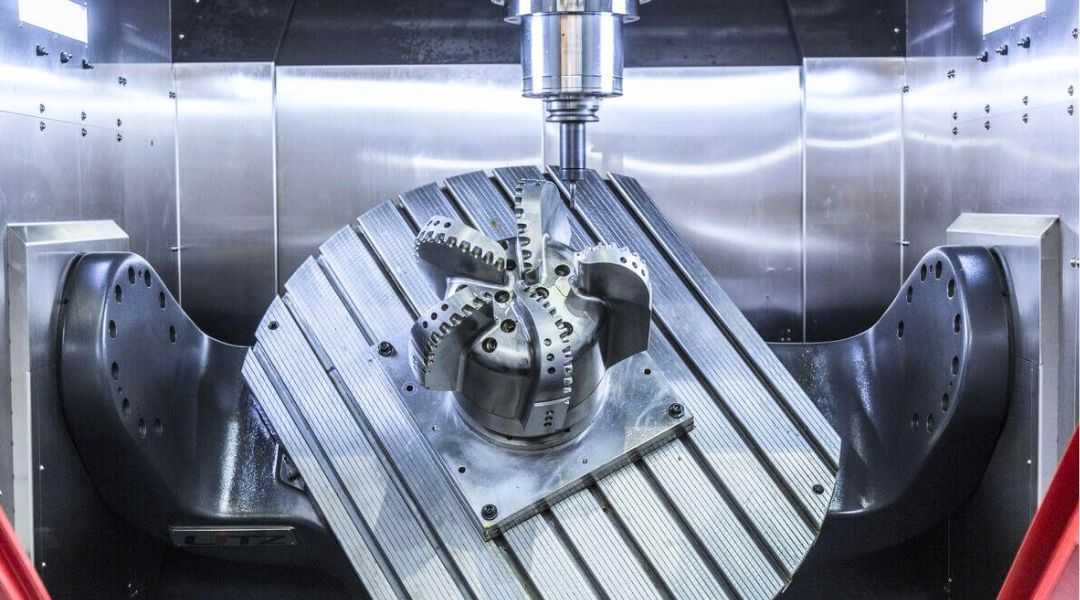
Surface hardening techniques play a crucial role in enhancing the performance, longevity, and functional reliability of CNC-fabricated steel parts across a wide range of industrial applications. As industries continue to demand components that can withstand greater mechanical stress, wear conditions, and thermal fluctuation, surface hardening has become an essential step in advanced manufacturing processes. CNC machining ensures dimensional precision and tight tolerances, but steel parts often require additional strengthening to achieve the surface durability necessary for demanding environments such as automotive systems, aerospace assemblies, medical instruments, heavy-duty machinery, and energy production equipment. Surface hardening modifies the material’s outer layer while keeping the core tough and ductile, resulting in a balanced combination of rigidity and impact resistance. This dual-property structure is ideal for gears, shafts, bearings, cams, bolts, die components, and countless other precision-engineered parts. With the rapid evolution of machining technologies and material science, manufacturers now have access to a wide array of surface hardening methods that can significantly improve wear resistance, reduce friction, and extend operational lifespan without altering the underlying geometry created through CNC fabrication.
One of the most widely used surface hardening methods for CNC-machined steel is heat-based transformation hardening, which includes techniques such as flame hardening, induction hardening, and laser hardening. These processes involve rapidly heating the surface of the steel to a temperature above its critical point and then quickly quenching it to form a hardened martensitic structure. This results in increased surface hardness, improved fatigue strength, and enhanced resistance to impact wear. Induction hardening is especially favored for components that require selective hardening, such as gear teeth, bearing surfaces, and cam profiles, because it allows precise control over heating depth and pattern. Laser hardening, on the other hand, uses concentrated laser beams to heat specific areas with exceptional accuracy, minimizing distortion and ensuring consistency even on complex geometries produced by multi-axis CNC machining. Flame hardening is more economical and suitable for larger components but may produce greater thermal distortion if not performed with exact coordination. Regardless of the chosen method, heat-based hardening significantly increases the durability of CNC-fabricated steel parts and ensures that they can operate under high load conditions without premature wear or surface degradation.
Chemical and diffusion-based surface hardening techniques also play a pivotal role in strengthening CNC-machined steel components. Processes such as carburizing, nitriding, carbonitriding, and ferritic nitrocarburizing introduce carbon and nitrogen atoms into the surface layer of steel, forming extremely hard compounds that drastically enhance wear resistance. Carburizing involves heating steel in a carbon-rich environment and is commonly used for gears, shafts, and fasteners that require deep case hardening. Nitriding, in contrast, occurs at lower temperatures and does not require quenching, making it ideal for precision CNC parts where dimensional stability is critical. This process forms hard nitride layers that improve not only wear resistance but also corrosion resistance and fatigue strength. Gas nitriding, plasma nitriding, and salt bath nitriding offer different levels of diffusion depth and hardness depending on the application requirements. Carbonitriding combines elements of both carburizing and nitriding, resulting in shallow but extremely hard layers suitable for high-volume production components like pins, small gears, and bushings. These chemical processes create surface structures that are highly resistant to abrasion, scuffing, and micro-pitting, making them indispensable in industries where operational reliability and long-term durability are non-negotiable.
Mechanical surface hardening techniques, such as shot peening, burnishing, and cold working, further contribute to strengthening CNC-fabricated steel parts without subjecting them to high temperatures or chemical environments. Shot peening is one of the most effective methods for improving fatigue strength by creating beneficial compressive stresses on the surface. This makes it invaluable for components exposed to cyclic loading, such as springs, connecting rods, turbine blades, and structural brackets. Burnishing is another technique used to smooth and harden surfaces by applying rolling pressure, resulting in improved surface finish, higher fatigue resistance, and reduced friction. Cold working methods, including cold rolling and swaging, enhance hardness through severe plastic deformation. These methods are widely used for components that must maintain extremely tight tolerances and superior surface integrity, especially in medical, aerospace, and precision automotive applications. Mechanical hardening offers the added advantage of being cost-effective and distortion-free, making it compatible with even the most delicate CNC-machined geometries.
In addition to traditional hardening techniques, modern technologies such as physical vapor deposition (PVD), chemical vapor deposition (CVD), thermal spray coatings, and ion implantation have emerged as advanced solutions for surface strengthening. These coating-based approaches create micro-thin layers of extremely hard materials, such as titanium nitride, chromium nitride, diamond-like carbon (DLC), and ceramic composites, on the surface of CNC-machined steel parts. PVD and CVD coatings are widely used on cutting tools, surgical instruments, engine components, and high-performance bearings to provide exceptional hardness, low friction, and enhanced corrosion protection. DLC coatings, in particular, offer outstanding wear resistance and are known for their extremely low coefficient of friction, making them ideal for sliding or rotating components. Thermal spray coatings provide thicker and more robust layers suitable for high-impact or high-temperature applications, while ion implantation diffuses alloying elements into the steel surface without affecting dimensional precision. These modern hardening technologies extend the capabilities of CNC-machined steel parts far beyond what traditional heat or mechanical treatments can achieve, offering manufacturers more pathways to enhance product performance in highly specialized applications.
Ultimately, the selection of a surface hardening technique depends on several key factors including the type of steel, the mechanical properties required, the operating environment, and the precision level needed for the final application. CNC machining creates the foundation of accuracy, but surface hardening determines how well a part performs under real-world conditions. Whether a component must withstand abrasive wear, resist thermal cycling, endure repetitive stress loads, or remain dimensionally stable during long-term operation, surface hardening techniques offer tailored solutions that significantly improve functional reliability. As industries continue to push the boundaries of engineering performance—demanding stronger, lighter, more durable, and more efficient components—surface hardening remains a critical innovation driver. For manufacturers aiming to optimize the lifespan and functionality of CNC-fabricated steel parts, mastering the appropriate hardening techniques is not just an advantage; it is a strategic necessity in the evolving landscape of precision manufacturing.